

Saving the Acupuncture Profession While Helping Millions - Part One
The Profession’s Biggest Mistake: Ignoring the Balance Between Supply and Demand

In Chinese medicine, health depends on balance. When yin and yang align, harmony follows. When this alignment faulters, illness takes hold.
“What happens when an imbalance affects not the patient, but the profession itself?”
Right now, in the U.S., the acupuncture profession is not well [1]. After years of financial struggles causing a high dropout rate among Acupuncturists, the impact is now also hitting acupuncture schools. The drop in enrollment in these schools is causing a ripple effect, spurring our main institutions and even TCM suppliers to worry about the sustainability of the profession. For the first time since this profession was formed, people finally seem ready to consider new ideas, or (I hope) ones once dismissed as impractical or too unconventional.
This first article makes the case that the root issue is simple but serious: an imbalance between supply and demand. Multiple factors contributed to this, but our failure to address it has been the profession’s biggest mistake.
Throughout this series, I will present solutions I believe are both logical and unconventional. I hope to spark meaningful dialogue that moves us forward.

A Little History
After years of studying Daoist philosophy, I entered acupuncture school in 1983 and opened my practice in 1986. Even as a student, I was drawn into the effort to build acupuncture and Chinese medicine into a recognized healthcare profession in the U.S.
“From the start, we were creating a profession inside a system that didn’t want us.”
In the mid 1970s and early 1980s, a small group of people came to the realization that traditional East Asian medicine, and especially acupuncture, offered something badly needed in the West. In the U.S., medical professionals are regulated by each state, so an effort began to get as many states as possible to pass legislation that would make being an “Acupuncturist”[2] legal and under state regulation.
This effort alone was a huge undertaking but only one piece of the puzzle. In addition to getting legislation passed and signed by each state’s governor, we needed to develop schools and examination systems that met the standards expected within the healthcare industry.
These other pieces of the puzzle, and the organizations that were built to undertake the needed tasks, became the cornerstones of the new acupuncture profession:
Lobbying—managed mainly by the professional membership associations.
Developing training standards and approval of schools to teach those standards, managed mainly by a school accreditation body.
The schools themselves
Systems for licensing/certifying exams, managed mainly by a national certification body in coordination with state regulators
There was also the need for the professional membership associations to represent the interests of those now getting licensed/certified and entering this new profession.
Astonishingly, much of this was accomplished in a short period of time, especially considering the resistance we faced. It was all done by working from the top down with regulators to create a supply of Acupuncturists so they would be trained, in place, and ready to treat people in need. So far, so good.
“We succeeded in building the supply. But we ignored the demand.”
The Step We Never Took
The profession never launched what should have been the next logical step: a coordinated effort to educate the public about acupuncture, what it can and can’t do, the training and scope of practice of Acupuncturists, and how to best utilize acupuncture services. This step should have then been paired with getting people referred to licensed/certified Acupuncturists.
In those early days, when I would bring up the need for public education, I would often be told, “All we have to do is make sure Acupuncturists are well trained, and the rest will take care of itself.” In other words:
“If you build it, they will come.”
The idea that demand for our services would grow organically without any serious effort on our part clearly failed. Demand grew more slowly than practitioner supply. When schools qualified for federal student loans, enrollment surged, but the patient base did not.
The consequences should have been predictable:
too few patients
struggling clinics
little hiring in hospitals
limited insurance coverage
weak political influence
the profession’s four cornerstones in trouble
Over time, some acupuncture schools began going out of business, the same fate many of their graduates faced.
The job of increasing demand by public education campaigns should have been done primarily by our professional membership associations. For decades, I advocated for this and offered specific plans to make that happen [3]. Leadership of these groups eventually began to agree in theory that this should be done but either thought they lacked capacity or were focused on internal emergencies.
“We built a profession from the top.
We never built awareness at the bottom.”
This article series is my latest effort to lobby the profession to get serious about building demand.
Every handful of years, I tell myself, “This is the last time I try.”
Now at seventy, with other life interests calling, I feel like it truly is.
I remain convinced, however, that acupuncture can help millions more people than it currently reaches if we finally correct the imbalance at the profession’s core. In doing so, we can still build a bright future, like so many in the early days thought would be inevitable. We have what people need. We just finally need to help them realize this.
Thank you for reading. I welcome your feedback, and I invite you to watch for the next article, where I’ll explore just how much demand could exist if we finally did this right.
I am most familiar with the dynamics happening in the U.S. so will focus on that. However, some of the factors I am describing in this series will also have applications to other countries, especially in the West.
Throughout this series, I will use the term “Acupuncturist” with an upper case “A” to designate those trained and certified/licensed by the systems we set up to create this new profession and to distinguish from other medical professionals that might provide acupuncture services (M.D.s, D.C., etc.). Not having the same title in every state for Acupuncturists is another mistake we made that I will be commenting more on in later articles.
Starting in my third post, I will offer more on the specific plans I put forward in the past and strategies for how we should proceed now.
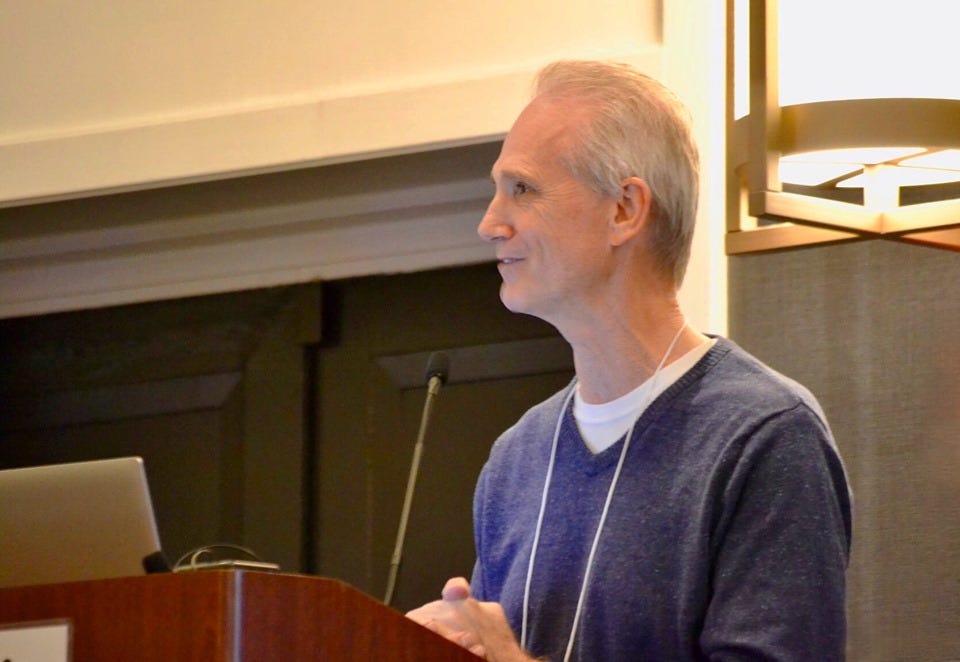
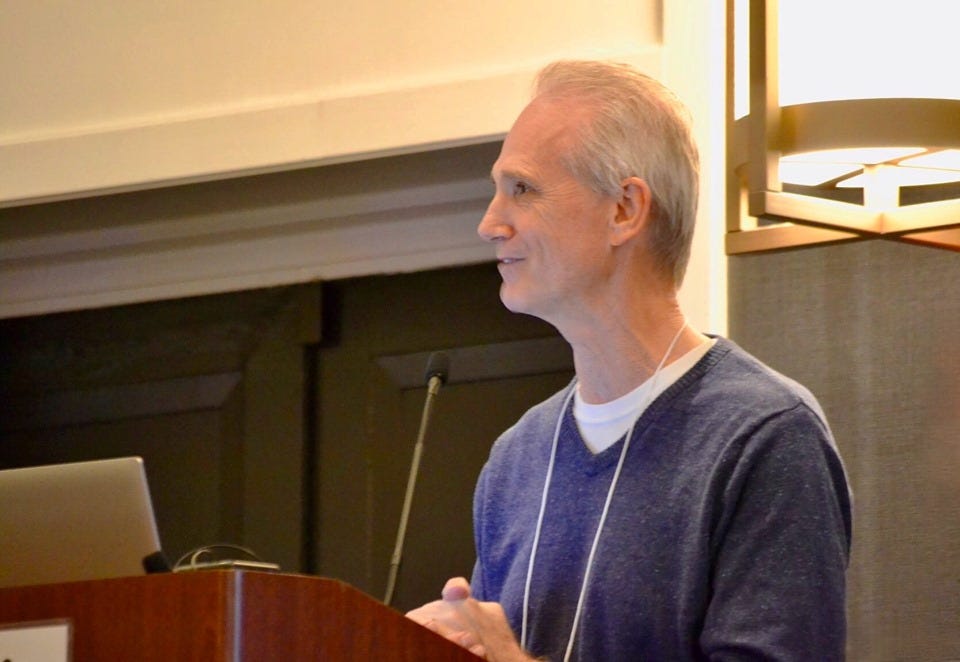
Matthew speaking at Atlantic Symposium 2019 Brought to you by the Acupuncture Now Foundation, a U.S. based, international non-profit supported by your donations


Hi John - thank you for your comments. I ran a full time practice as a solo practitioner for 36 years and was able to support a family of 4 with the practice as the sole source of support. I agree with everything you are saying about how to run a practice. I wrote a lot about all you discussed in my book Making Acupuncture Pay. Making it as easy as possible for people to access your services is key - keeping regular hours, affordable fees, accepting insurance (in the beginning for the learning curve, then you may opt out later), a LOT of teaching self care and explaining that acupuncture works by helping us squeeze more out of our own resources.
However, although people like you (and your wife) and me prove you can build a successful and sustainable practice without the profession taking on public education - we are the exceptions, not the rule. Yes, too many come out of our schools with no clue about how to grind it out, but the lack of public understanding makes that grind WAY harder than it need be. If people really understood what acupuncture can do for them, the work would be much easier. That is the subject of next week's article. I hope you will give it a look as well as those to follow. This series will eventually go into some pretty deep waters.
Thank you for taking on this issue. I had heard that the profession and schools were struggling but when I look at my practice we are thriving. My wife and I have a practice in Northern California since 2007 and we see 130+ patients a week. I work 4 days a week and my wife 3 days a week. I treat a lot of veterans and workers compensation. My wife does a lot of women’s health. It is a very good balance. Here are some keys to our success: Set up an office, hire a front office person to answer the phone etc, do good work and stay in that location. You have to run your practice like all other professional medical offices. Learn how to bill from someone like Mori West. You must learn and embrace the business side. Only do managed care like ASH if you’re starting out. Do not settle for less. All of our patients get a combination of acupuncture and body work and they always leave the clinic feeling better. We do not do marketing or networking. We teach and promote a lot of self care. Find a simple way to explain acupuncture to your patients. Keep it simple, like “acupuncture is like pressing the GFI switch of the body or injured muscle….” I think one of the reasons the profession is struggling is not lack of patient education but that new acupuncturist not committing time and effort to creating a business model for long term growth. Working part time or for a chiropractor…. is not sustainable long term. The Acupuncture profession will not grow and stand on it’s own if individual practitioners do not put in place the successful practices of other medical professionals.